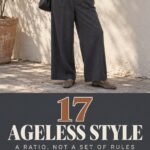
Timeless is good advice until it becomes an excuse
Most advice about dressing well as you get older says the same thing. Buy classics, buy quality, avoid trends. It is genuinely good advice, and a navy blazer and a decent pair of trousers will outlast almost everything sold as essential this season. The problem is that nobody ever tells you when to reconsider. The jacket you bought fifteen years ago is beautifully made, it still buttons, and it is also the reason people can date your wardrobe from across a room. Timeless works right up until it turns into a reason never to change anything. That is what ageless style actually is, and it has very little to do with your age. It is a ratio. A wardrobe of reliable anchors, refreshed with a small number of current pieces, cut in proportions that look like now rather than like whenever you last updated. Seventeen ideas below, across the anchors worth keeping, the updates worth making, the proportions that do the work, and the accessories and carriage that finish it.
The ratio that actually matters
Keep most of your wardrobe stable and change a little every season. A colour, a print, a shoe shape, one new silhouette. That is enough to signal you are paying attention without tipping into trying too hard, and it is far more sustainable than a full seasonal overhaul.
Take the trend and leave the costume. You never have to wear a trend as presented. Wide-leg trousers with a blazer you already own is the trend. Wide-leg trousers with every other thing from the same runway look is the costume. Choose the one element that suits how you already dress.
And do the future test in the changing room. Look at the mirror and ask whether you will still want this in five years, because the answer is usually obvious and usually ignored. It is the fastest way to stop buying things you wear twice.
Direction 1: The anchors worth keeping
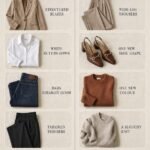
1. The structured blazer

A well-cut blazer in navy, charcoal or camel, with a shoulder that fits you properly. It carries jeans, trousers and dresses and it is the single most useful thing in a wardrobe. The shoulder seam is the only fit point that cannot be altered, so get that right and tailor the rest.
2. The crisp button-down
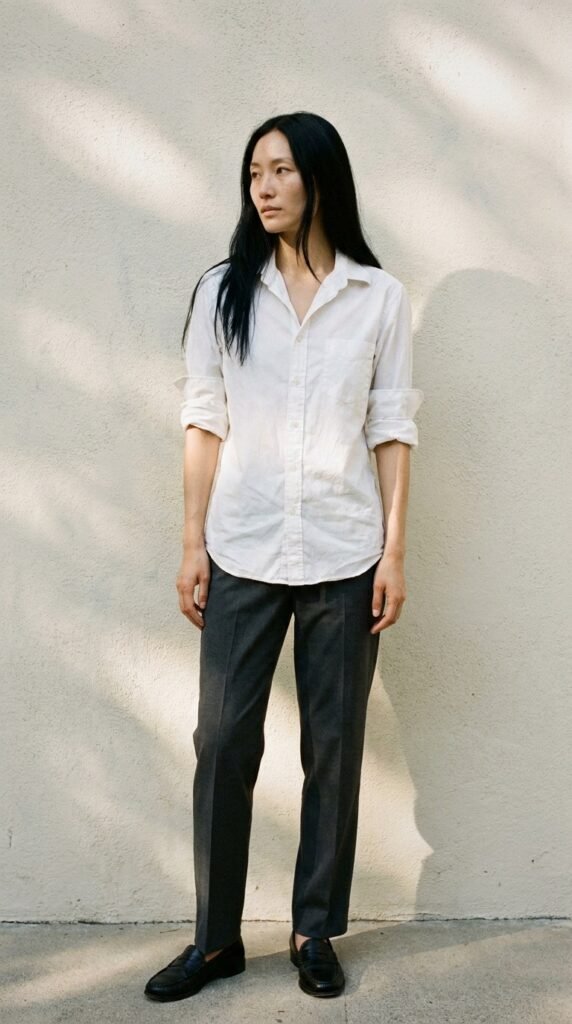
A white or pale blue cotton shirt that holds its shape. It works under a blazer, over a tee, tucked into trousers or open over a tank. Buy two, because one is always in the wash when you need it.
3. Dark straight-leg denim
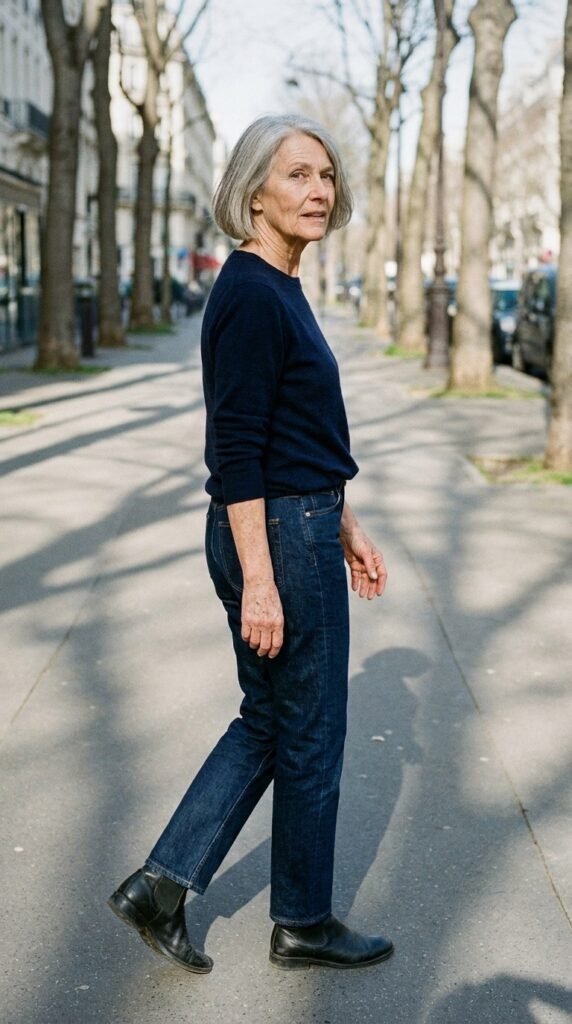
Dark indigo or black denim in a straight or slim-straight cut, with no fading and no distressing. Dark denim reads dressed rather than casual, which is what makes it so versatile. Replace it when the knees go, rather than wearing them soft.
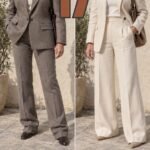
4. Tailored trousers
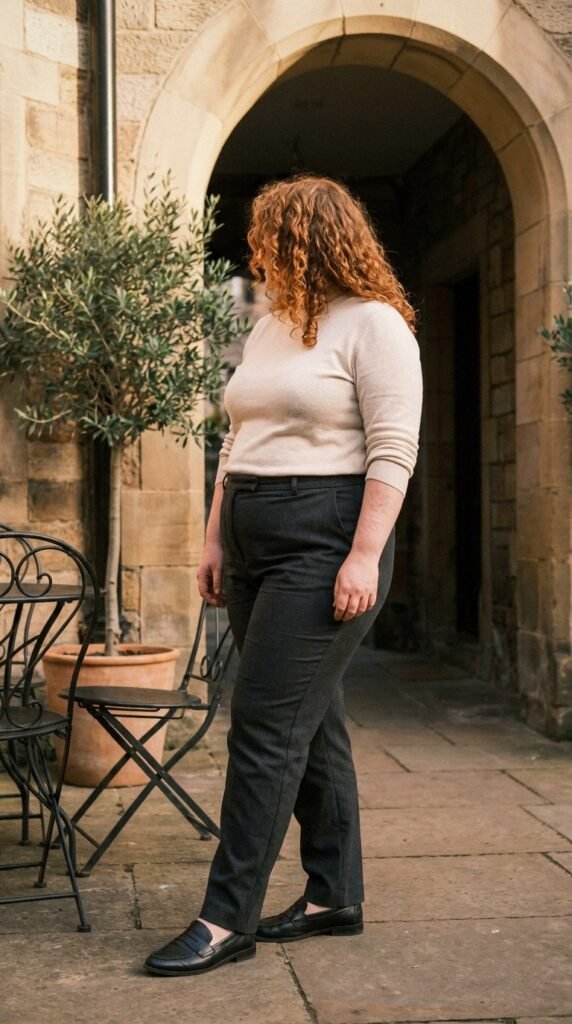
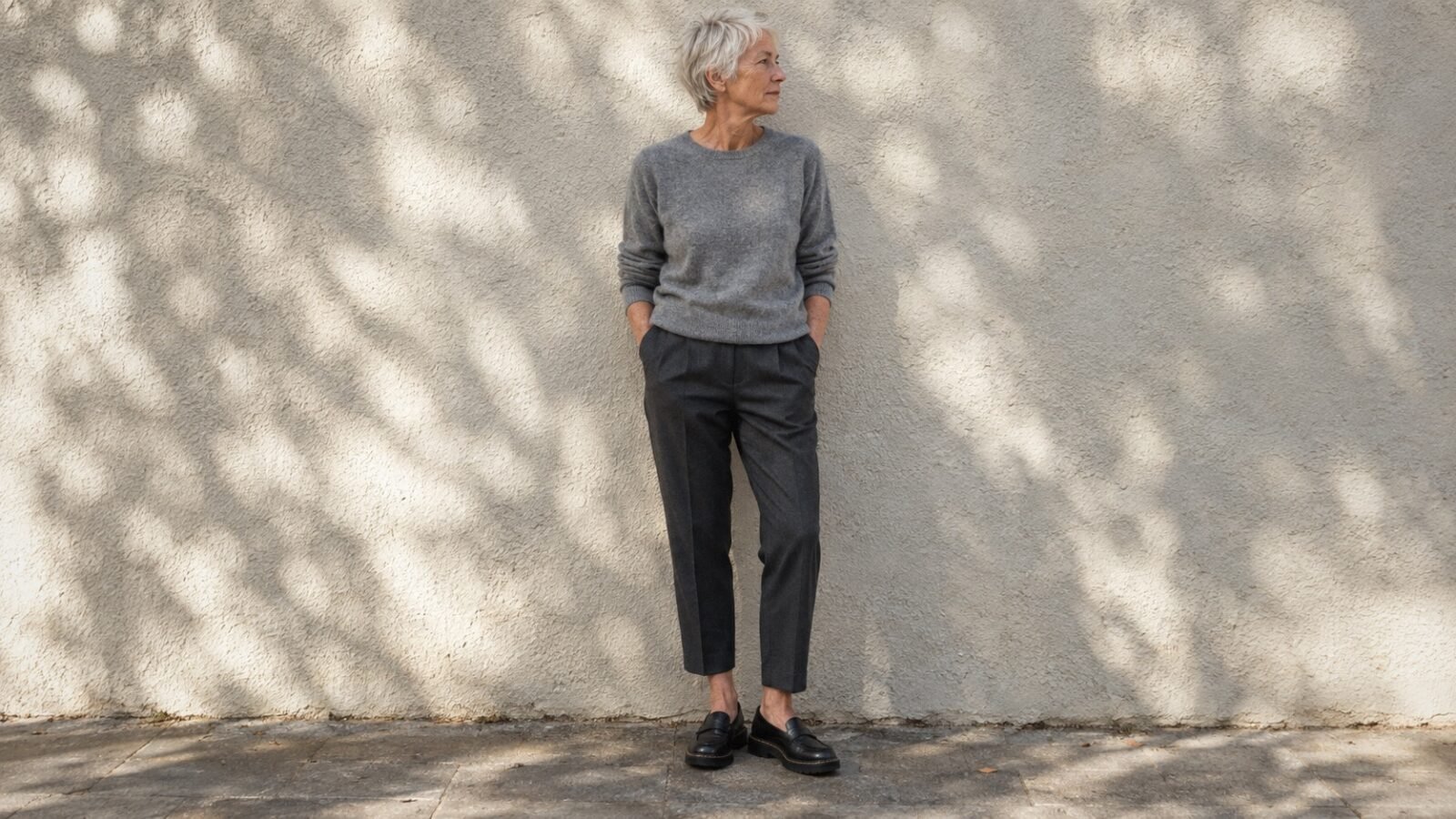
Two or three pairs in charcoal, black and a warm neutral, in crepe or wool. Trousers are where fit shows most obviously and where good tailoring pays for itself. Find a cut that works and buy it again rather than hunting for variety.
5. The simple dark dress
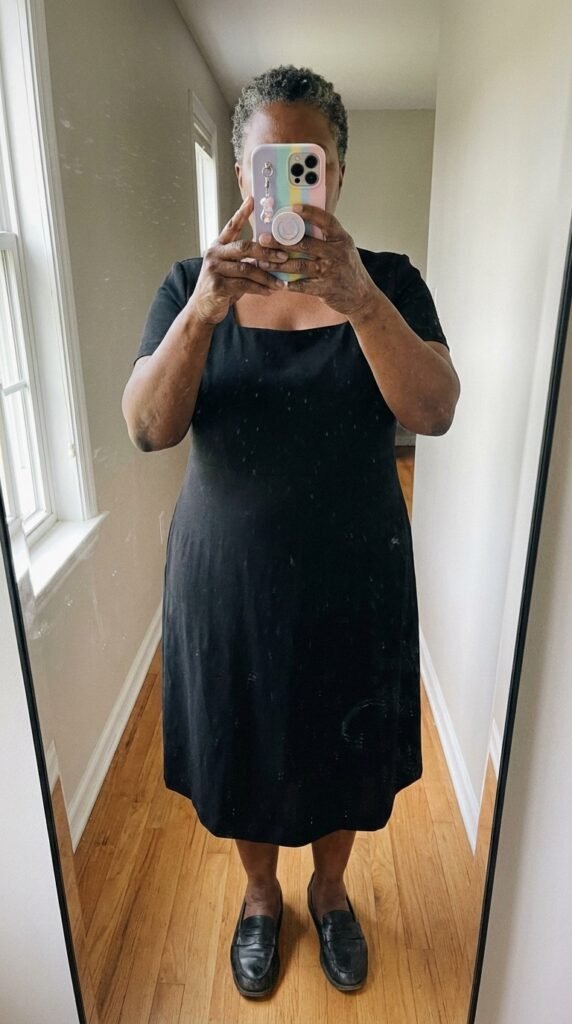
A plain dress in a good fabric with a clean neckline, in black or a deep neutral. It solves dinners, funerals, work events and anything you did not plan for. Keep it unfussy so accessories can change its register.
Direction 2: The updates worth making
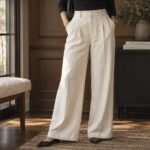
6. Wide-leg trousers
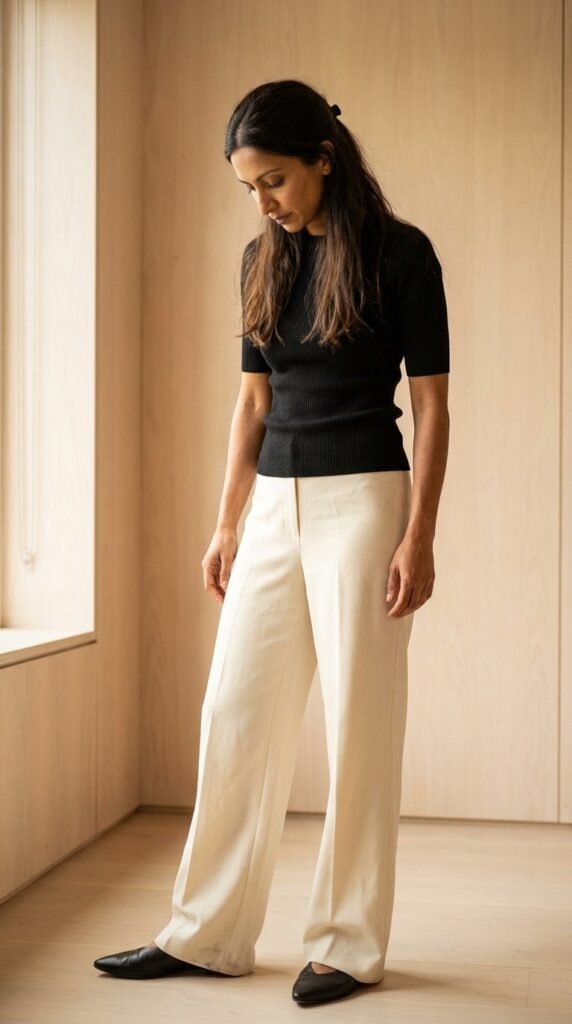
A genuinely wide or relaxed leg in crepe, linen or soft jersey, worn with a tucked shirt or a fitted knit for balance. Wide legs are a real staple of 2026 rather than a passing shape, and they elongate the leg line beautifully. This is the single most effective update on this list.
7. One current shoe shape
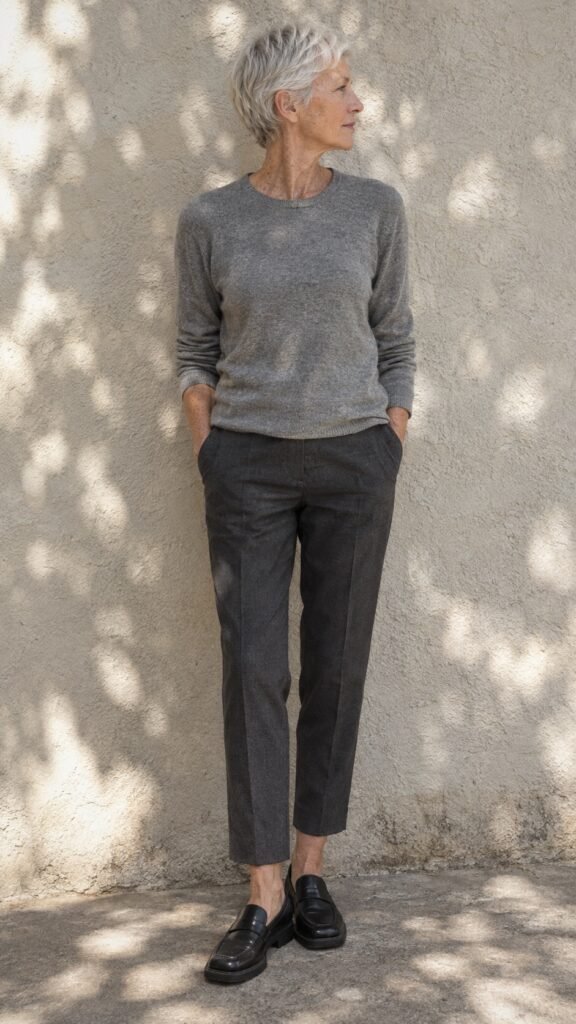
A pointed or sculptural-heeled boot, a chunky loafer, a squared-off flat. Shoes date an outfit faster than clothes do, so updating the shoe shape modernises everything you already own. It is also the cheapest way to shift a whole wardrobe forward.
8. A colour you have not worn
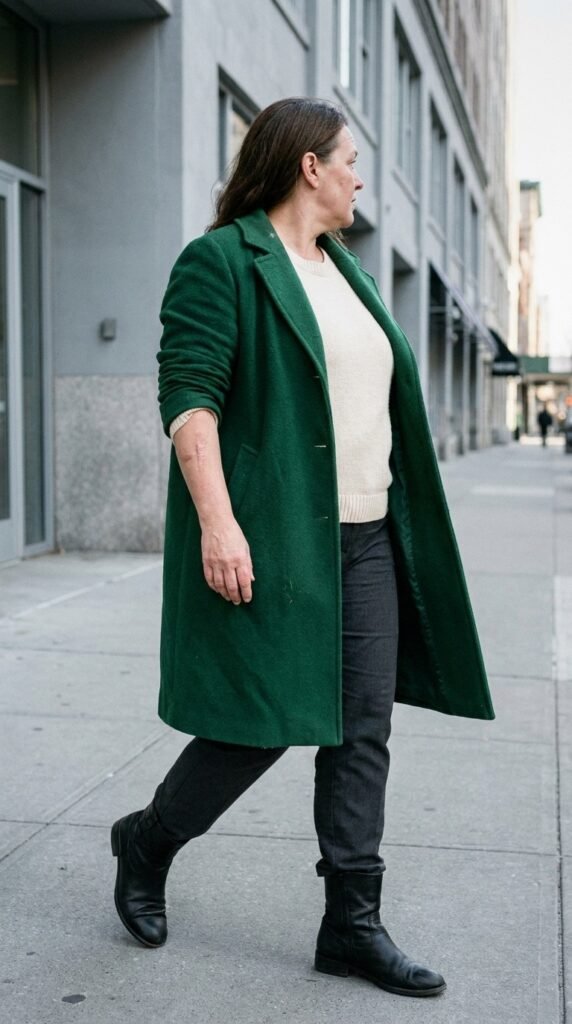
One saturated shade added to a neutral wardrobe, worn as a knit, a coat or a bag. Jewel tones and warm browns are both having a genuine moment and both sit comfortably against neutrals. One piece is enough.
9. A relaxed knit
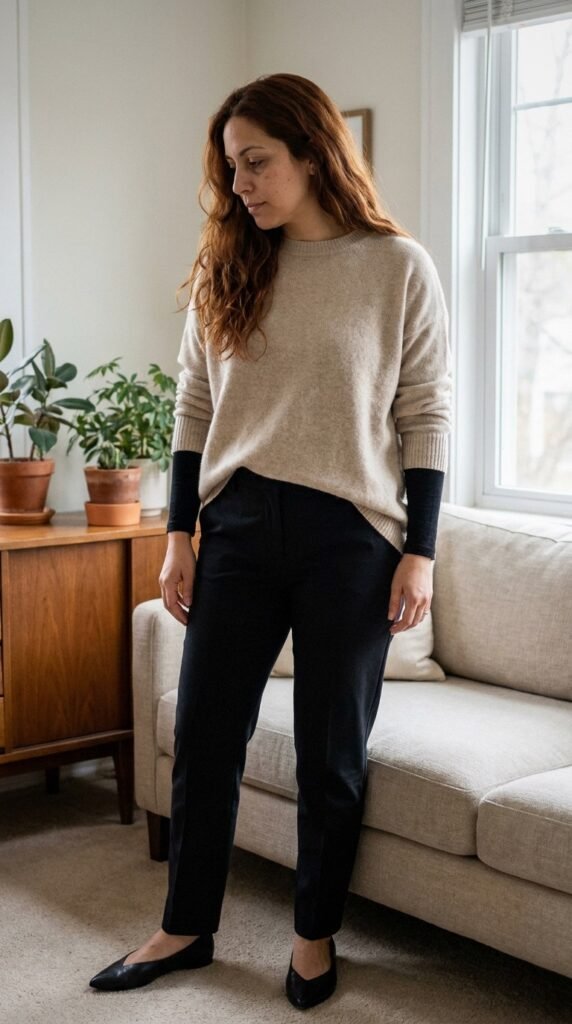
A slouchy fine-gauge knit in cashmere or merino, worn slightly oversized over something fitted. The proportion is what makes it current rather than shapeless. Good yarn reads expensive from across a room.
Direction 3: Proportion does most of the work
10. One loose, one fitted
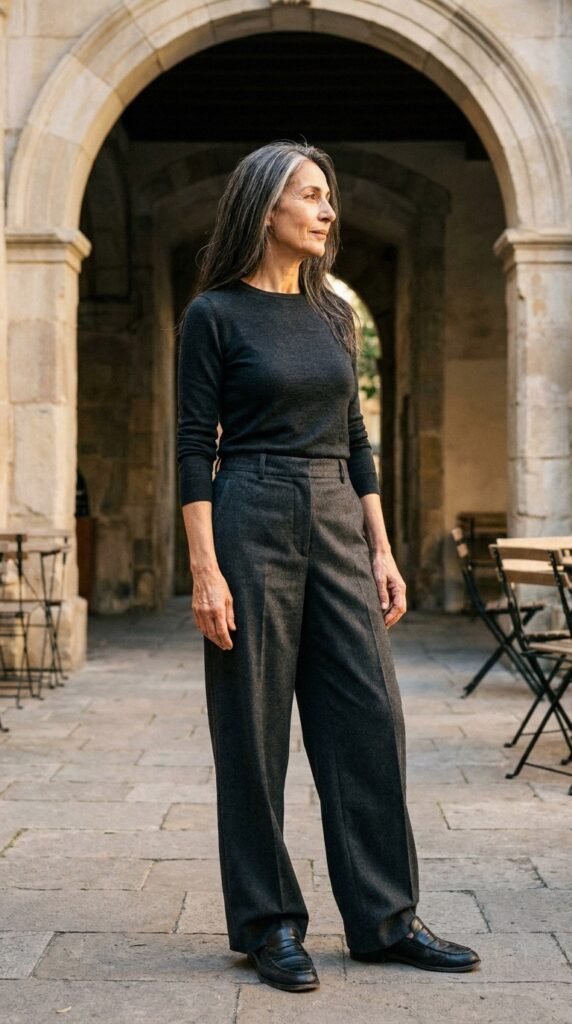
Wide trousers with a fitted knit, or a slouchy jumper with slim trousers. Balancing volume against shape is the most reliable styling rule there is and it works at every age and size. Two loose pieces together is where outfits go wrong.
11. Define the waist somewhere
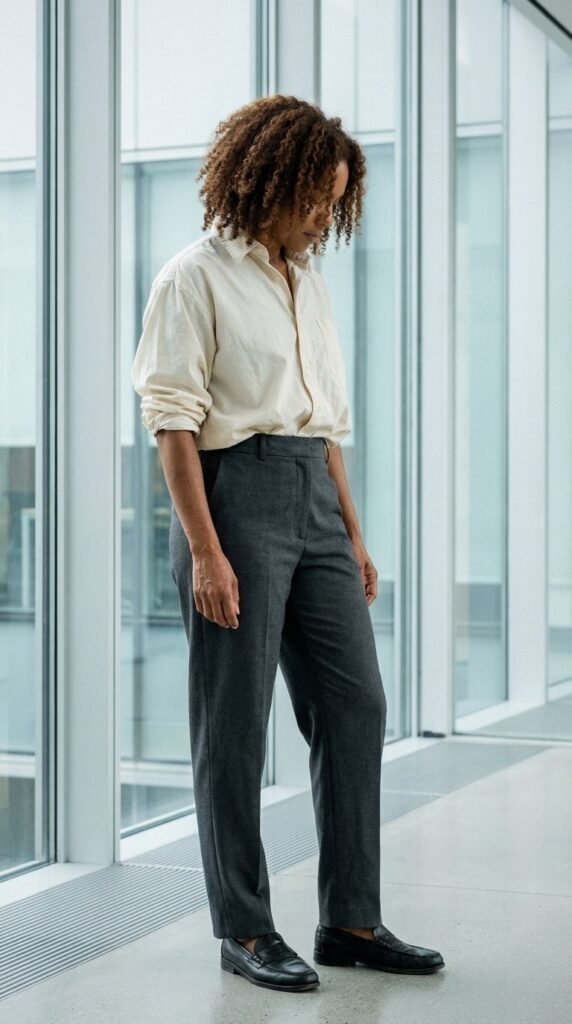
A tuck, a belt, a higher rise, or a jacket that nips slightly. It does not have to be tight, it just has to be visible, otherwise the eye has nowhere to land. A front tuck is enough.
12. Keep the line long
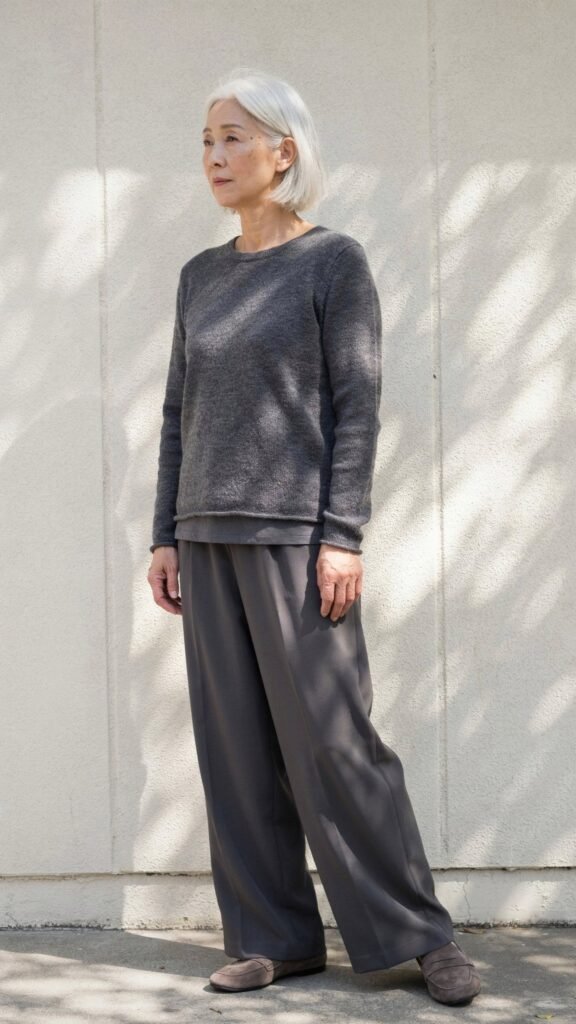
Tonal dressing, a high rise, a hem that hits the right point, shoes close to your skin or trouser colour. Clean unbroken lines read modern and elongate, which is the actual reason columns and monochrome work. It has nothing to do with hiding anything.
13. Check your hem lengths
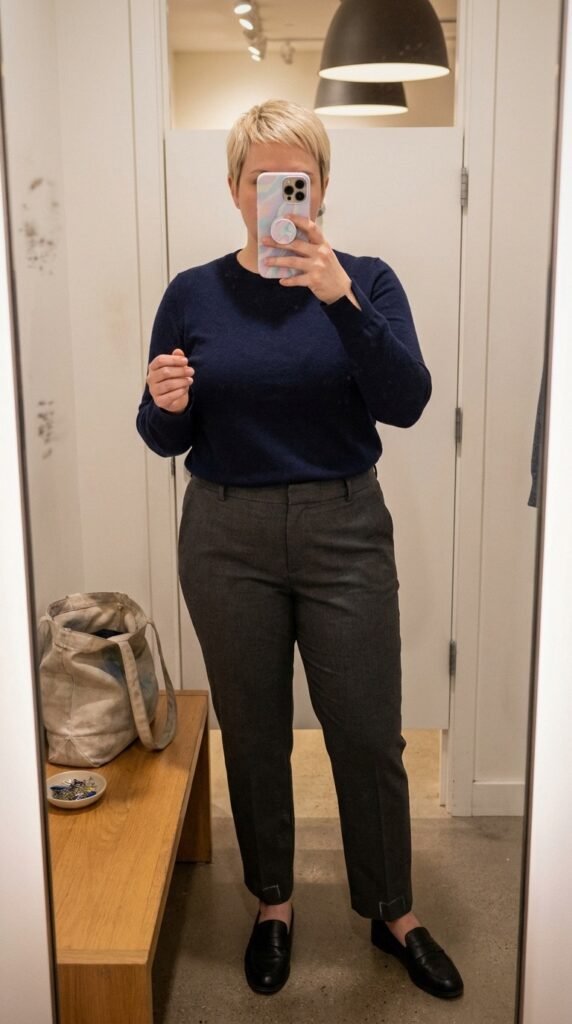
Trousers that graze the shoe, skirts at the narrowest point of your calf, sleeves at the wrist bone. Hem length is the detail that separates clothes that fit from clothes that were bought, and it costs very little to correct. Almost everything off the rack needs it.
Direction 4: Accessories and carriage
14. Buy fewer, better shoes
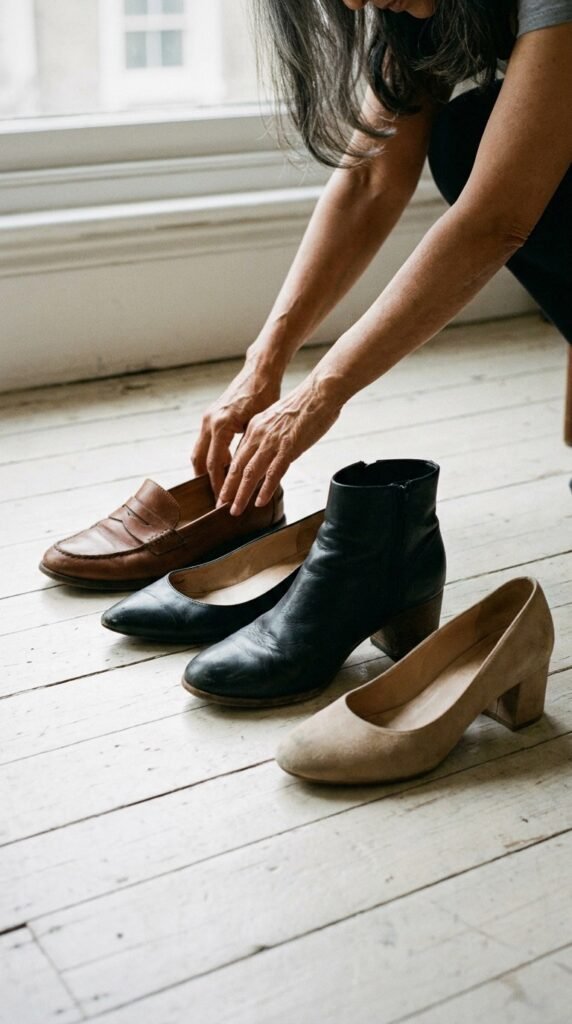
A loafer, a pointed flat, an ankle boot and one heel you can actually walk in. Quality over quantity genuinely matters here because shoes are the first thing to look tired. Comfortable and elegant are not opposites, whatever you were told in your twenties.
15. One good bag
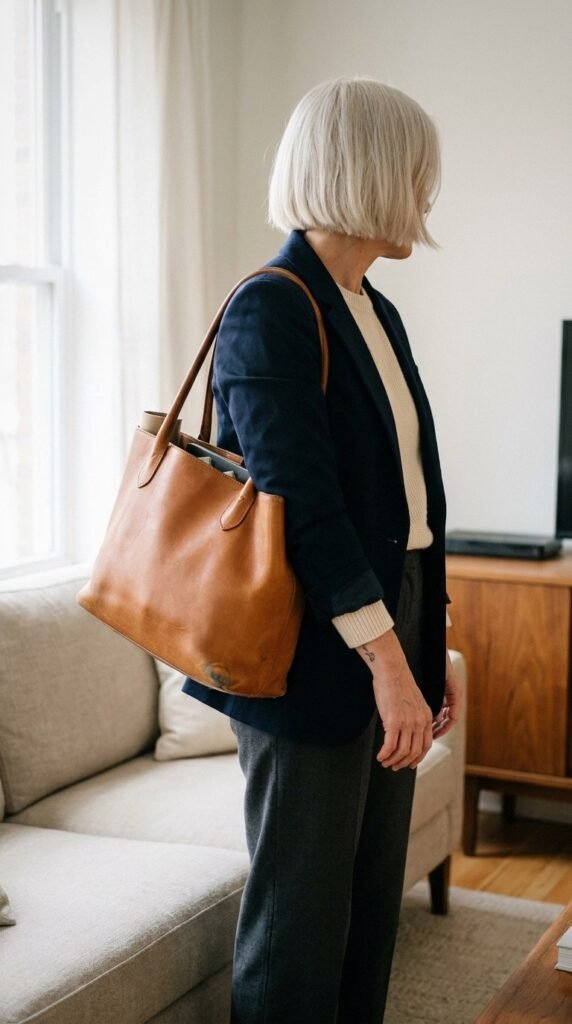
A structured leather bag in a neutral, big enough for real life. It lifts everything it is carried with and it is the accessory people notice without registering why. Buy the best one you can and use it daily.
16. Jewellery with intent

A few pieces you actually like, worn consistently, rather than a rotating collection. Signature jewellery becomes part of how people recognise you, which is the whole point of personal style. One metal, chosen and repeated.
17. Posture, and wearing it like you meant it
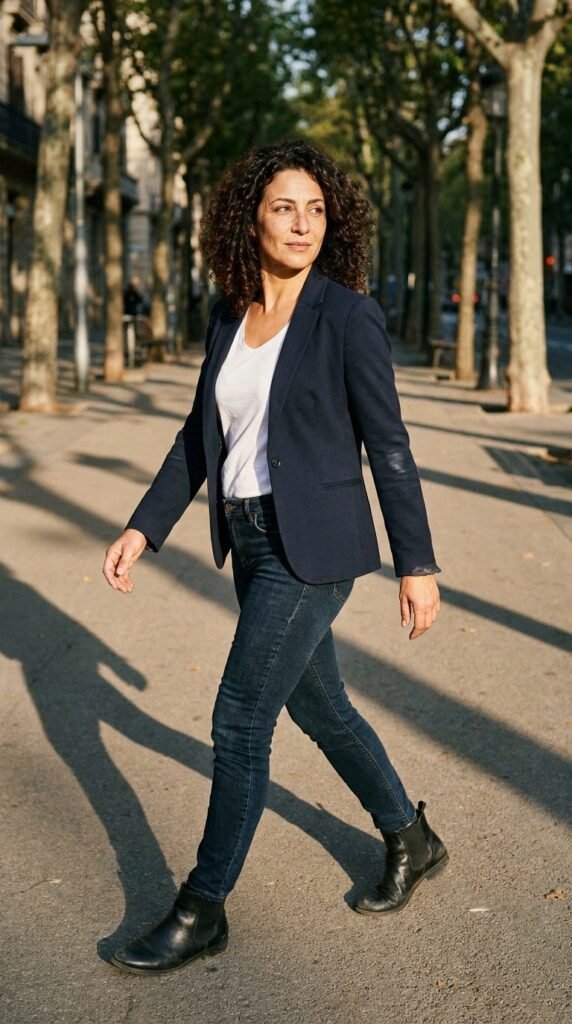
Standing tall and not fidgeting with your clothes does more for an outfit than any individual purchase. If you are adjusting something all evening, the garment is wrong rather than you. Confidence is not a personality trait here, it is mostly just a well-fitting outfit you have stopped thinking about.
How to audit what you already own
Try on the pieces you have kept the longest. Not to throw them out, but to look honestly at the shoulder line, the trouser width and the hem. Beautifully made and currently shaped are two different things, and a good tailor can often fix the gap for less than a new jacket costs.
Notice what you reach for and what you do not. The things hanging untouched are telling you something, usually about fit or comfort rather than taste. Move them out of the main wardrobe for a season and see if you miss them.
And look at people whose style you admire rather than people your age. The women who look genuinely good in their fifties, sixties and beyond have almost always narrowed down to what actually suits them and then repeated it. That is not a rule about age, it is just what happens when someone stops dressing to a formula and starts dressing like themselves.
If I am picking three to start with
Update the shoe shape, because it modernises every outfit you already own for the least money. Add one pair of wide-leg trousers, because it is the silhouette doing the most work right now and it goes with the blazers you have. And get your hems checked, because it is the cheapest change on this list and the one people notice without knowing why. Save this to your style board on Pinterest and start with the audit rather than the shopping.